
01 / Delivery
Is work moving more effectively?
Look at review turnaround and follow-up work alongside the context behind each change. More activity alone does not prove better engineering.
Software for AI engineering effectiveness
Your team is figuring out how to build with AI. Binomial brings your engineering evidence together, so you can see how the work is changing, talk through the friction, and choose what to improve next.
Start with a few repositories. Your GitHub connection is read-only.
A look inside Binomial
Example workspace · App screens with example data.
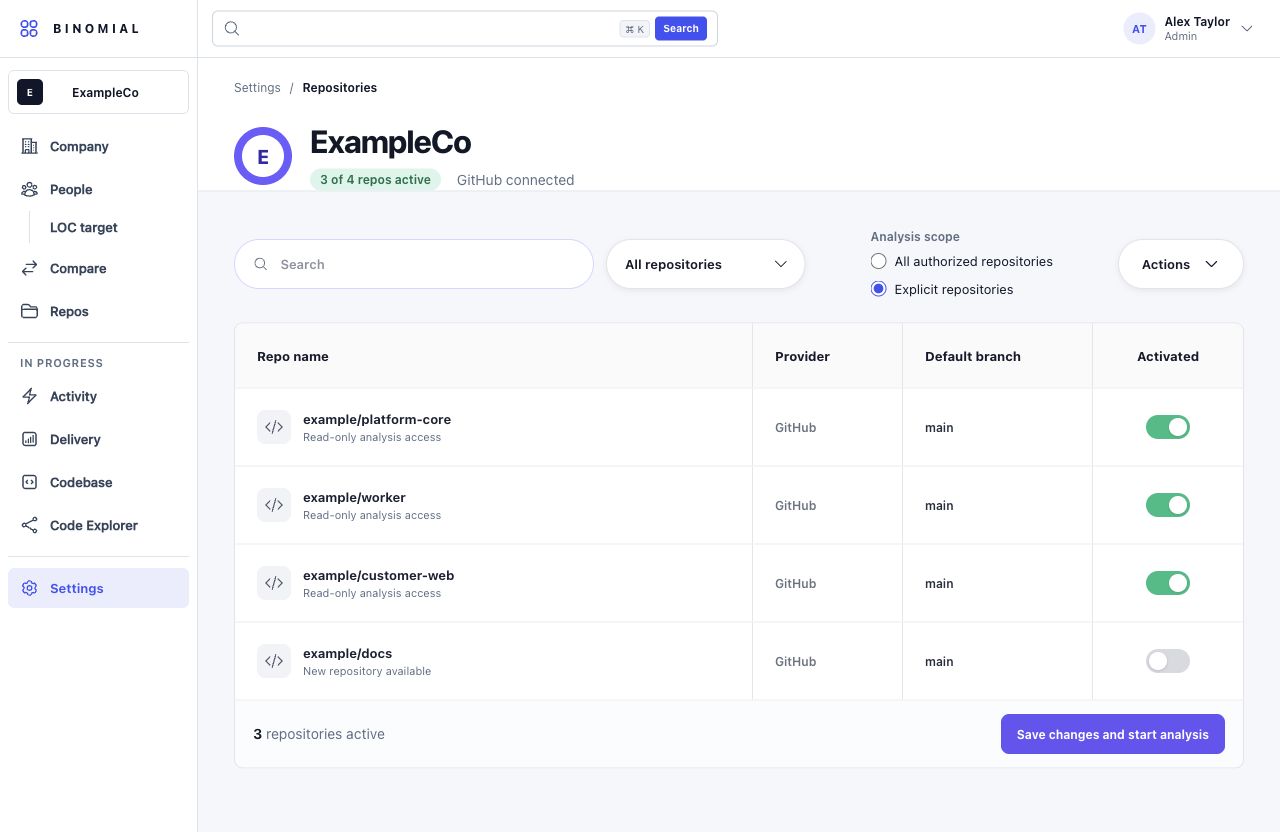
Choose a few repositories for read-only analysis. This example workspace has three active repositories and one left outside the scope.
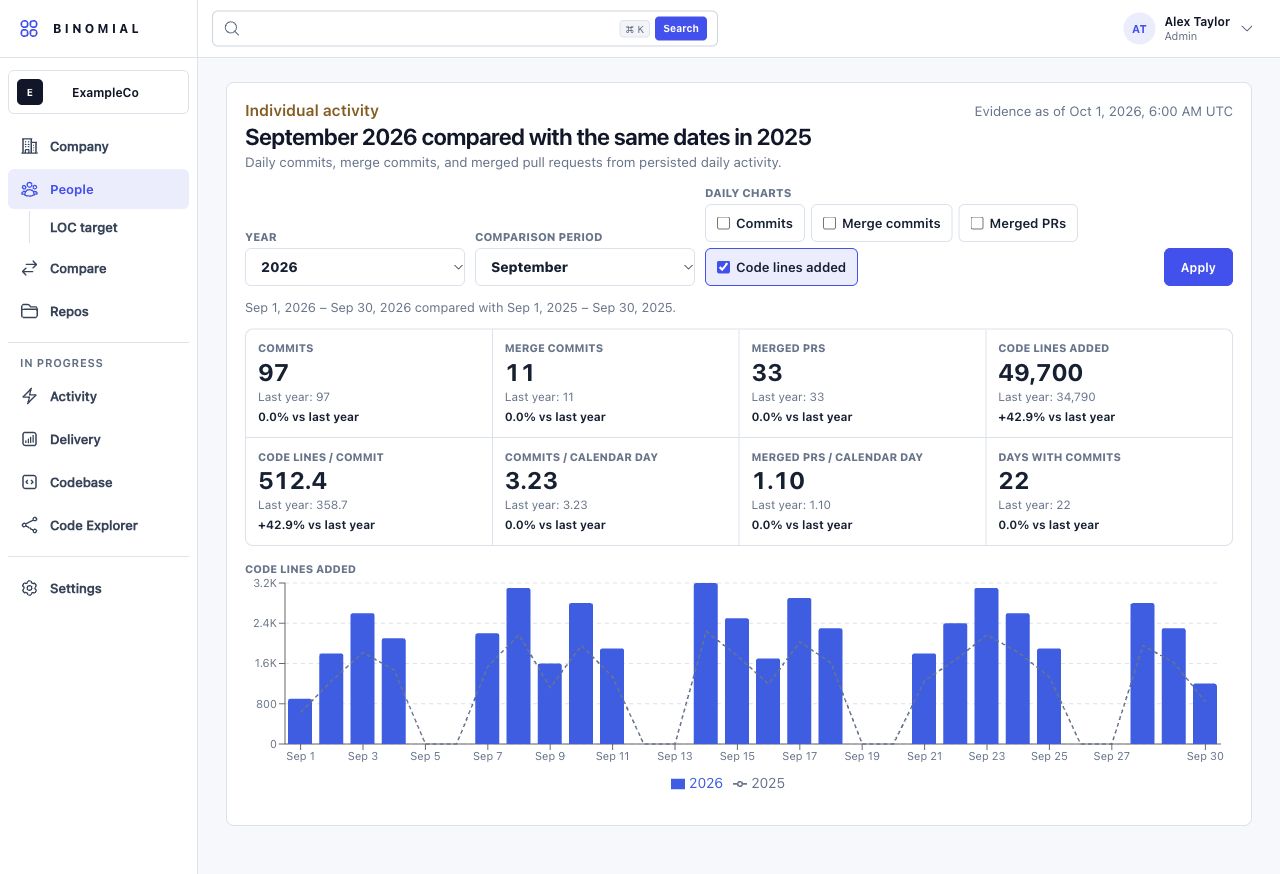
LOC means lines of code. Review code lines added in delivered commits alongside commit and pull request activity over the selected period.
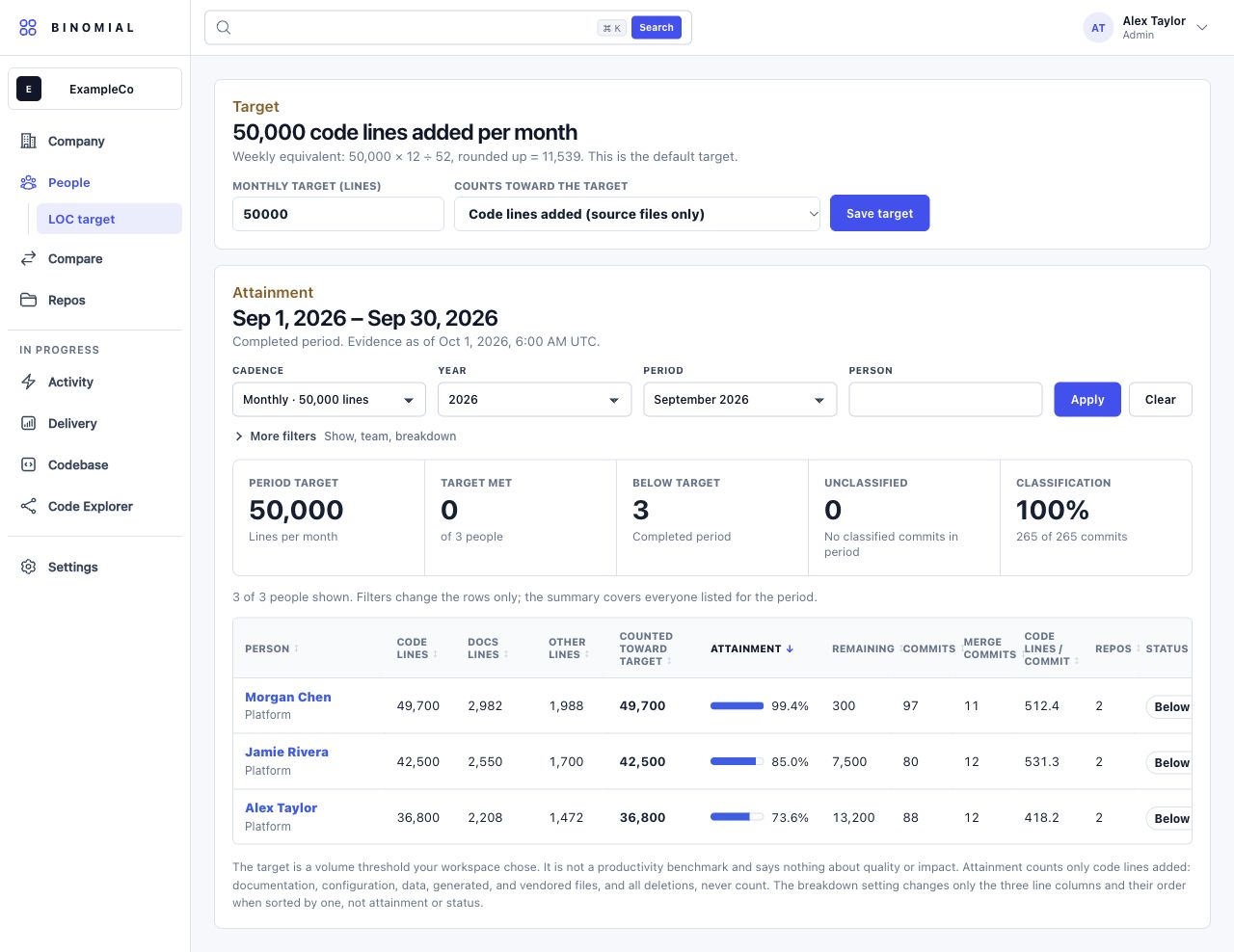
The example monthly target is 50,000 code LOC. September closes at 49,700, with 300 remaining. Adjust the target to the work and review it alongside the surrounding engineering context.
From activity to understanding
AI changes how work gets done. Binomial helps you examine what happens next: review, rework, codebase readiness, and the practices worth repeating.
01 / Delivery
Look at review turnaround and follow-up work alongside the context behind each change. More activity alone does not prove better engineering.
02 / Codebases
Investigate repository patterns, ownership, and codebase conditions that make AI-assisted work harder to validate and maintain.
03 / Practices
Turn evidence into better coaching conversations. Try a focused change, then review the next window with your team.
From the engineering notebook
AI makes it easier to produce code. Understanding it, and knowing when it is ready to own, still takes practice.
From convincing demos to important failure paths, this perspective explores the habits that turn generated code into software your team can maintain.
Read the perspectiveBased on Coding with AI Is like Guitar Hero.
One finding. The full picture.
Explore three example findings. Each keeps the observations, interpretation, confidence, and limitations beside the recommendation.
Example data
A focused way to begin
Start with GitHub Cloud for self-service setup and a selected set of repositories. Other supported source-control systems and on-premises environments can be connected through advanced setup. Reports become available as collection and analysis complete.
Sign up through GitHub and authorize the read-only connection for your organization.
Select the repositories you want to understand. Keep the scope relevant to your team's questions.
Review available reports, collection status, and findings as your engineering evidence is processed.
Designed for context
Your scope stays explicit. Findings keep their evidence and limitations attached. Individual insights support coaching and development, with authorized access.
Binomial does not collapse a person into a productivity score or make automated personnel decisions.
Explore the trust modelStart with your engineering evidence
Connect your GitHub repositories and start understanding the patterns behind your engineering outcomes.